Wednesday, February 22, 2012

The Religious Athlete

It's impossible to watch ESPN, or an NBA game, or read the sports section these days without hearing or seeing a reference to Jeremy Lin.

From the awful ("Linevitable"?) puns in the New York Post to breathless "Top Ten Lin Moments" on SportsCenter (after one week as a starter? seriously?) he has been everywhere. And not without reason - his is a "feel good" story if ever there was one, although one suspects if he was plying his trade in Houston or San Francisco, his two former NBA teams, he wouldn't be getting nearly the press that comes with playing in Madison Square Garden.

Lin shooting over a Laker in a recent game.

By far the most interesting analysis regarding Lin's instant fame, however, hasn't been from ESPN or even the New York Times sports section. It's been from David Brooks, the Times' columnist, who analyzed Lin's faith and, as Brooks sees it, the inevitable conflict between devoutly religious athletes and athletic success. 

Brooks believes that success in the sports world and living a religious life are antithetical. Far be it from me to summarize Brooks' position -- he is perhaps the political and social pundit whose writing and intellect I admire most -- so let's just let him say it:

Ascent in the sports universe is a straight shot. You set your goal, and you climb toward greatness. But ascent in the religious universe often proceeds by a series of inversions: You have to be willing to lose yourself in order to find yourself; to gain everything you have to be willing to give up everything; the last shall be first; it's not about you . . . Sports history is littered with odd quotations from people who try to reconcile their love of sport with their religious creed -- and fail.

As much as I agree with Brooks regarding many star athletes, I disagree just as strongly with regard to sport in general, and amateur sports in particular. Devotion to a craft or simply a belief in one's natural talent may result in self-centeredness at the pinnacle of a sport, particularly individual sports, which may be difficult to reconcile with subservience or submission to a great power or the greater good. But Brooks paints with too broad a brush. While a belief in oneself or the need to prove oneself may be necessary to the inner drive that is required to succeed at the very highest level, team sports teach us something very different.

The concept of team, and with it that the whole is greater than the sum of the parts, is the very essence of sport. It also permeates every aspect of our daily lives, on the field and off. Being a "team player" or "taking one for the team" are concepts that everyone in our culture understands and most value. Sports at any level can and do teach us that practice, hard work, and perseverance can help make even that teammate who is not naturally gifted or athletically talented a valued member. Even if it's just by working hard in practice, or providing a warm body to scrimmage against, or supporting teammates during a game.

These values that anyone can learn by participating in a team sport - loyalty, honesty, hard work, self-sacrifice - are exactly the same as those demanded by our religious ethos, or even more generally, by democracies. I don't see a conflict between succeeding as a team member and religion or society. In fact, I believe that what sports teach us about teamwork is another reason why our society values sport, and why it can and does make us better members of that collective effort.

Thursday, February 16, 2012

No One Wants to See It

You've probably heard by now about Paul Withee, the high school football coach in Maine (51 years old, by the way), who had the good sense to decide to send his girlfriend a “candid photo” of himself in all his glory, and nothing else.

Somehow (and don’t expect me to explain) the coach accidentally posted the picture on his Facebook profile instead of posting it in a private section or emailing it to his girlfriend. And, as luck would have it, while it was only up 30 minutes, it was seen by several folks, including a parent of one of his players.

Not surprisingly, the coach is now an ex-coach and, while the school district has first opened and then closed (after the coach's resignation) an investigation, it can't be too happy about what transpired and what the incident says about the folks that it employs to teach and mold its students.

Most of the blogging and other commentary about the incident have focused on the perils of intermixing work, personal relationships, social media, and technological ignorance or ineptitude. I initially thought about doing the same, focusing on concerns about privacy settings and information mining that have been heightened lately regarding both Facebook and Google.

Then I had a thought.

What if Mr. Withee had just had the good sense to not take the picture in the first place?

Sure, we can talk about the dangers of social media use, whether it's a good idea or not to "friend" students or athletes if you're a teacher or coach, whether privacy settings and their constant changes on social media sites and search engines make it difficult, dangerous, and intrusive to use the internet. But the bottom line here is, if Withee hadn't decided that his girlfriend would want to see the photo, and if he hadn't had the ability to take it and then try to send it to her, then no one would be none the wiser.

In the good old days, Withee wouldn't have had the ability (or inability as the case may be) to disgrace himself and convert himself from a successful coach to an unemployed one in the blink of a digital camera. At best, he could have tried to take a Polaroid of himself and slip it to his gal, or stick it in the mail. Eventually, he would have probably been done in by an inappropriate comment or suggestion, but the entire world would have never known.

Idiots are, and always have been, idiots. It's just that technology makes it easier for everyone to know exactly who they are. Parents, students, employers, the government. Everyone with a cell phone has a digital camera and every buffoon with an email account or a Facebook page has the ability to publish to the world anything they want.

Even if nobody else wants to see it.

Would you want a nude photo of this man on your Facebook page?

Withee was duly "embarrassed", "ashamed", and "humiliated" by the incident and said that he had never done anything like that before. While there is plenty of reason to not believe that, simply put, once was one time too many.

It's real simple, guys. As much as you like to think they do, no one, and I mean no one, needs to see a photo of you and/or "it." No matter what your wife, girlfriend, or significant other says, they don't need to see it, and aren't as impressed as they let on. No matter how tempted you are, no matter what a good idea you think it is, don't take that picture.

The best explanation is not having to explain.

Wednesday, February 1, 2012

Pouring It On

The United States women's national soccer team qualified for the Olympics this past week at the CONCACAF tournament held in Vancouver, beating Canada 4-0 in the Final. The women also avenged their loss to Mexico in World Cup qualifying a year ago, beating them 4-0 in the group stage.

All told, the U.S. outscored their opponents 38-0 in the five game, ten day tournament. Those gaudy statistics were aided by a 14-0 thrashing of the Dominican Republic in the first game of group play and a 13-0 stomping of Guatemala in the second. 

Those two wins had some people grumbling that the Americans' coach, Pia Sundhage, had lost her sense of sportsmanship. Adding fuel to the fire was the fact that substitute Amy Rodriguez scored five second half goals against the Dominicans and Sydney Leroux the same number (also in the second half as a substitute) against Guatemala.

Sydney Leroux, celebrating after a goal
against North Korea in the U-20 World Cup.

It's easy for someone who isn't a coach in general, or the coach of a national team in particular, to make a judgment call about what is or isn't sporting. But, having been in Sundhage's position a few times myself, I am convinced that there are no simple answers to the question of when, or whether, to call off the dogs.

In my third season as a head coach my high school team beat a school, which happened to be our biggest rival in all sports, 13-0. We didn't start the game intending to inflict that type of humiliation, but things got out of control on the pitch and before I knew it, it was too late to try to save the dignity of the opposing team. I apologized after the match to the opposing coach, who I like very much. He graciously deflected my genuine remorse with a simple "it's our job to stop you and we couldn't" but if anything that just made me feel worse.

After that, my team never scored more than nine goals in a game against any team, no matter how badly out-matched they were. As we strengthened our schedule those breathers got fewer and farther between, but there were always a few matches each year where it was more work to not embarrass the other team than it was to win. I would devise various games within a game to try to keep the score down - after six or seven goals we could only shoot outside the 18, or shoot after five consecutive passes, score on a header, or only a player who had not scored that season, or had never scored, could shoot.

And the players played by the rules or else. I remember at least one game when one of our stars (and one of the fiercest competitors that I ever coached) shot and scored during a blow-out when the rule in effect did not allow it. The goal made the score 9-0 and I immediately yanked her out of the match. She came to the touch-line with a "what did I do wrong?" look on her face, but she knew. And every other player on our team knew too.

My job of trying to keep the score down, though, was easier than Sundhage's. Most importantly, I had the ability to freely substitute players and did so. Sundhage, on the other hand, was limited to three substitutions per match in the tournament. And, let's face it, her bench is a wee bit more talented than mine was.

Another factor that was to my advantage was that when the score got to nine, we would simply pass the ball around. No shooting, no scoring. It was always a concern that it would look like we were toying with the other team. And, to some extent, we were. But we were playing on a field in West Virginia with 50 or so people in the stands most times. The memories of those who played or watched have faded with regard to how the score was reached, but the score itself has not.

To play "keep away" in front of 20,000 fans and television audience, however, is a very different proposition. Was it more humiliating for the Dominicans and Guatemalans to lose by two touchdowns (one with a missed extra point) or to lose 9-0 and have to chase the U.S. players for the last 20 minutes of the match, everyone knowing that they were not up to the task? Would that have been a more sporting way for the U.S. to play rather than continuing to try to score?

I'm not sure I know the answer, or that there is one. But I do know that anyone who says they are absolutely sure what the answer is has, very likely, never had to make that decision themselves.

Thursday, January 26, 2012

It's Time to Come Out

Two recent events have drawn my attention to the issues of sexual orientation, soccer, and the need for a modern day Jackie Robinson, not only in soccer but in all of men's sports.

I tend to think of soccer's culture, as it has grown in this country in the past two decades, as residing primarily among the white and upper middle class. While soccer was at one time largely the bastion of immigrants here, its recent explosion is no doubt due to suburban parents and players. From my interaction with coaches, players, parents, and fans, I regard soccer followers as tolerant folk.

In doing so I forget soccer's roots as the World's game, played by the lower and lower middle class, as a means of entertainment and escape (from reality and, occasionally, from their circumstances). While I've declined in other posts to expound on the nature of sport as a substitute for combat or the hunt, it is undeniable that, in many other parts of the world, sport in general and soccer in particular are still viewed as somewhat gladiatorial.

This attitude is reflected by the attitudes towards, or restrictions placed on, women's soccer teams in many parts of the world, particularly in predominantly Islamic countries. While these restrictions are purportedly based on Sharia law, they are certainly reflective, I believe, of the attitudes of those nations and cultures with regard to women and their place not only in sport but in society. And certainly the same issues are being fought out in broader society in non-Islamic nations as well.

Lest we consider the "West" more enlightened, however, recent developments in Germany and England and less recently in Brazil all indicate differently, at least where sexual orientation is concerned.

Last week, as a parting plea upon his departure as president of the German Football Association ("DFB"), Theo Zwanziger called for gay players "to have the courage to declare themselves." Zwanziger cited German politician Klaus Wowereit, the Mayor of Berlin, as an example of how a public figure acknowledging his or her own homosexuality can contribute towards making public acceptance of various sexual orientations more likely.

In response, Philipp Lahm, the captain of the German national team, described Zwanziger's plea as unrealistic. "Football is like being the gladiators in the old times," Lahm was quoted as saying. "The politicians can come out these days, for sure, but they don't have to play in front of 60,000 people every week."

Zwanziger, describing Lahm as a tolerant person, said that he wouldn't criticize Lahm for his views. But while they may be realistic, they certainly aren't brave.

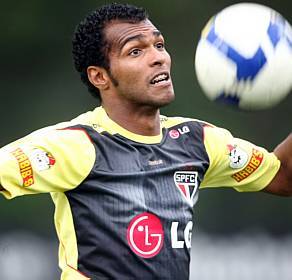
Also last week, news came that Blackburn Rovers were contemplating a bid for a Brazilian midfielder named Richarlyson. A midfielder and defender who has had a successful club career and won two caps for his national team, Richarlyson would seem to be the type of player in whom the big clubs of Europe would have an interest.

Richarlyson

But for the fact that he was publicly identified as gay, he might well have been. Richarlyson's outing (if it can be called that -- he has apparently neither admitted nor denied publicly that he is gay) occurred when the coach of a rival team "accidentally" identified Richarlyson as the player in Brazil's top division who was rumored to be gay.

It got worse for Richarlyson when, after suing the coach for defamation, the presiding judge dismissed the lawsuit, reportedly on the grounds that soccer is a "virile masculine sport and not a homosexual one." The judge went so far as to suggest that because of his assumed sexual orientation "Richarlyson should be forever banished by FIFA and never be allowed to play football again".

The decision was appealed and Richarlyson's lawyers were quoted as saying that they would sue the judge as well but, although these incidents occurred in 2007, there is nothing on the internet (at least in English) to indicate that the judge was disciplined or a civil lawsuit was instituted against him. Not surprisingly, Richarlyson's professional career has not benefited from the controversy -- he transferred in 2010 from one of the biggest clubs in Brazil, Sao Paulo, and after two appearance with the national team in 2008 has not had another cap.

While I understand Lahm's position that a professional player would risk derision from fans and players if he were to come out, I can't help but think of the parallels between gay athletes today and those who fifty years ago broke the color barrier in professional sports in this country. The notion that the first "big name" professional athlete to declare his homosexuality would face more vitriol than Jackie Robinson or Emlen Tunnell is, I believe, false.

It will no doubt take a player with the courage of his convictions, a thick skin, and athletic talent to be the first to break the orientation barrier, just as it did for football and baseball here. But once that barrier is broken, the benefits to other gay players, and ultimately to society, are immense.

Sports allow, even require, fans in particular and citizens in general to reevaluate their attitudes and prejudices towards certain groups. While the differences between the races are hardly resolved here, the fact that we have had in the past two years a national championship football team from the Deep South with a black quarterback and, in the past four, a black president, have to be accounted for, at least in part, by pioneer athletes who endured the threats and chants of those who were opposed to them solely because of the color of their skin a half century ago.

In the same way I believe that the first internationally recognized soccer player who steps up the the microphone and declares his sexuality will lead to the second, then the third, then many more. And he will no doubt have to endure years, perhaps a lifetime, of bigoted songs from the terraces (perhaps even those of his own club), physical threats, and the cold shoulder from some teammates. But the volume and ferocity of those chants and threats will lessen over time, and lessen with each additional player who comes out.

And when they do, when some day an admittedly gay player captains a World Cup squad or a Champions' League finalist, then everyone will have to acknowledge, on one level or another, that homosexual soccer players (or baseball players, or football players) can be just as skilled, just as committed, just as much a member of the team, as any heterosexual player.

Soccer needs its Jackie Robinson. He's out there somewhere. It's time for him to step forward.

We're waiting.


Monday, January 9, 2012

When Enough Is Enough

Now that my coaching days are over, I've spent more time over the past two months being a fan - of music, of American football, but most of all of soccer and Blackburn Rovers.

These are not good times if you're a Rovers fan. In fact, they may well be the worst of times. For while I and many of my fellow supporters with whom I commiserate (or, to put it more accurately, whose commiserations I read on our list-serve without comment these days) have lived through the dark days of relegation and far too many inept players and managers in the past, we always had hope. Now, we have none.

That hope was provided by two means: first, strong, ambitious ownership provided by local-boy-made good steel magnate Jack Walker; and, second, dedicated, knowledgeable decision-making from the front office, led by long-time Rovers' employee John Williams.


A statute of Jack Walker outside Ewood Park in Blackburn.

Walker's love for Rovers was clear from the millions of pounds that he spent turning the club from a Second Division afterthought into the Premier League Champions. It was not a love shared by his family, however. After Walker died in 2000, his holdings, including the Rovers, were put in a family trust. For a time the trust operated Rovers with parsimonious oversight but not neglect, allowing Williams, who began working for the club in the 1990s and rose to the rank of Chairman, to spend enough money to keep Rovers afloat.

Eventually Walker's heirs tired of the drain on their fortune that Rovers created and sought a new owner for the club. After several false starts and many rumored interests, finally a buyer was found: Venky's. I knew nothing of the company at the time but learned that it is based in India, began as a poultry company, and is privately held, owned by a family named Rao. Several fans expressed concerns about Venky's true intentions for the club from the start (sell off all the "assets"? treat it as their play toy like some Indian version of the Beverly Hillbillies?) but I put it down to the "glass half-empty" nature of most Rovers fans, or, to be honest, perhaps a touch of bigotry.

There is no doubt, however, that Venky's ownership of Rovers has been an unmitigated public relations disaster. Soon after taking over they fired manager Sam Allardyce, claiming that he lacked the ambition that Venky's had for the club. While many Rovers' fans (me included) were dissatisfied with Allardyce's boring tactics we were comfortable Big Sam's ability to keep Rovers in the Premier League.

In his place Venky's appointed Steve Kean, the club's first team coach, as the new manager. Kean expressed what was apparently the requisite ambition for Rovers -- attractive soccer, a top five finish, and challenging for the championship. But he had no real managerial experience before taking the job and his ambitions seemed completely out of touch with small town football in the toughest league in the World. Kean's reign has been marked by last minute collapses, poor tactical decisions, and, perhaps most galling, toadying to Venky's (including frequent command performances in India at a time when he should be devoting his energies to his club).

Kean's summons to India are indicative of Venky's management style, which appears to be to trust the counsel of those who tell them what they want to hear and ignore those who don't. Particularly troubling is the relationship of Venky's to player agent Jerome Anderson, who, despite his fervent denials, seems to have considerable influence with the owners in player and managerial decisions (he represents Kean and his son is on the Rovers' roster).

Even more troubling than Allardyce's dismissal was Williams' departure soon after. While managers always come and go, especially at smaller clubs like Rovers who tend to either lose the successful ones to bigger clubs or fire the unsuccessful ones when at the brink of relegation, the chairman is hopefully the constant -- the one person in whom power lies who can be expected to do what is in the best interests of the club, not him or her self. Williams was certainly that person for Rovers.

Matters off the pitch reached a fever pitch this past week as Kean accused a growingly vocal majority of Rovers' supports calling for his (and Venky's) ouster of essentially not being "true" fans. This apparent effort by two Johnny-come-latelies to take it upon themselves to define who is or is not a "fan" follows on the heels of previous attempts to censor fan's statements about the club (under the disingenuous guise of safety concerns) by prohibiting anti-Kean banners at Ewood Park.

The beliefs of many supporters regarding Venky's ineptitude was confirmed earlier this week with the belated release of a letter that was sent by Williams and two other then-Board members noted that they were being by-passed and ignored regarding the most fundamental decisions made at the club: "We now find ... that the board are not even being consulted on some of the most fundamental decisions this or any other football club ever makes. This includes the termination of the manager's employment and the appointment of a new manager."

Venky's and Kean's actions and statements have sparked a discussion among Rovers' fans regarding what it means to be a fan and, when matters of The Club and Our Club collide, how a true fan should act.

This is, admittedly, an easier call for me to make than that of those who were born in Blackburn, or near there. Many figuratively bleed Blue and White and some, literally, will be buried in the Blue and White halves. The Club has been "theirs" for thirty, forty, fifty, or more years. They are season ticket holders who have invested their lives in the club.

But, simply put, it is no longer their club. It is Venky's, and they have made that very clear with everything they have done since they bought the club.

While fans are relatively powerless these days in the face of billionaire owners, multi-millionaire players, and millionaire agents, they do have one chit left. And that is the ultimate one. To not willingly pay one penny (pence?) to further the interests of those owners, players, and agents.

If they have already purchased their season tickets for 2011-12 I encourage them to attend the matches, root for the Rovers, cheer every goal, boo or whistle at every appearance by Kean, and hope for the best. But don't buy a pie or a pint or a shirt on the grounds. Do not give Venky's one more penny.

As for me, I laugh at the emails that I get from Rovers telling me about the latest sale at the club's on-line shop and scoff at the invitations to sign up for internet access to match commentary and video highlights. For now, I'll just have to console myself with my Tugay Rovers' shirt and my tape of the 2002 League Cup triumph over Spurs.

For me, enough is enough.

Friday, December 30, 2011

Favorite Songs of 2011 - Songs 1-10

And now the Top Ten. Happy New Year all!

1. Calamity Song by The Decemberists.

"Had a dream.
You and me and the war of the end-times.
And I believe; California succumbed to the fault line.
We heaved relief.
As scores of innocents died."


The second "new" song that I heard in 2011 (the second track on "The King is Dead") and still my favorite 11 1/2 months later. Only Colin Meloy (okay, and maybe Michael Stipe and Florence Welch) could write such a bouncy, upbeat song about the apocalypse.

2. Bushwick Blues by The Delta Spirit.

"So maybe I'm the fool
for feeling used.
Well, the way we kissed that night -
I thought you knew.
Because my love is strong.
And my heart is weak.
After all."


 Thanks to my brother Jeff for turning me on to them. I'm sorry I missed them at Mountain Stage last year.

3. Yer Spring by Hey Rosetta!

"Oh man I hate this part -
When the car sails off the bridge.
Am I the knuckles white inside?
Am I the water rushing in?"


 Probably my favorite lines from any song all year long.

4. Barton Hollow by The Civil Wars.

"Ain't going back to Barton Hollow;
Devil gonna follow me 'ere I go.
Won't do me no good washing in the river;
Can't no preacher man save my . . . soul."


The video HAD to be black and white, didn't it? I love the way the singers' voices blend.

5. We Will All be Changed by Seryn. 

"We can write with ink and pen,
But we will sow with seeds instead.
Starting with words we've said.
We will all be changed."


I think I first saw mention of this song this summer on someone's "Best Songs of 2011 So Far" list.

6. Smart by Girl in a Coma.

"Hold your head up though you're shaking.
I've never felt a rush like this; not quite like this.
You were never one to fake it.
I've never felt a lust like this; not quite like this."


Just love the vocals on this song.

7. 100 Other Lovers by Devotchka.

"I know it's coming;
I can feel it in my bones.
This is information you already know.
Even if it's only temporarily;
Give the illusion tonight you belong to me."


I saw them at Bonnaroo too, and while they were great, they, somewhat disappointingly, didn't play this song.

8. Under Cover of Darkness by The Strokes.

"Get dressed, jump out of bed and do it best.
Are you OK?
I’ve been out around this town
And everybody’s been singing the same song, ten years."


I wanna be Julian Casablancas when I grow up.

9. Too Dramatic by Ra Ra Riot.

"Don't listen when you're weary.
Oh, but I wanna talk about it.

You and me weren't made for that, I'm sure."


Love the strings; not crazy about the video.

10. Down in the Valley by The Head and the Heart.

"Call it one drink too many; call it pride of a man.
But it don't make no difference if you sit or you stand.
'Cause they both end in trouble and start with a grin.
Yeah they both end in trouble and start with a grin."


The only group with more than one song in the Top Thirty other than The Decemberists, The Head and the Heart is a must-see in concert if you get the chance. Even if it's under a tent in 95 degree heat in the middle of a dusty field in Tennessee.

Monday, December 19, 2011

Favorite Songs of 2011 - Songs 11-20

The middle ten of my favorite songs from this year (or, in some cases, last).

11. Down by the Water by The Decemberists.

"All dolled up in gabardine
The lash-flashing Leda of pier nineteen
Queen of the water and queen of the old main drag."


I don't pretend to understand what Colin Meloy's getting at here, but I like it just the same.

12. You Are a Tourist by Death Cab for Cutie.
"When you find yourself the villain
In the story you have written,
It's plain to see.
That sometimes the best intentions
Are in need of redemption
Would you agree?"


Saw them live this year too, at Merriweather Post Pavilion along with Frightened Rabbit.

13. Faster by Matt Nathanson.

"You bite my lip.
You spike my blood.
You make my heart
Beat
Faster."


 A ridiculously sappy-sweet love song. But (every once in a while) there's nothing wrong with that.

14. California (Hustle and Flow) by Social Distortion.

"Well, I was born, babe, with nothing to lose
But the black man taught me how to sing the blues
Made a little life outta rock ‘n’ roll
And that crazy California hustle and flow."


Another ol' fashion rock 'n roll song.

15. Boeing 737 by The Low Anthem.

"I was in the air when the towers came down
In a bar on the 84th floor.
I bought Philippe Petit a round,
and asked what his high wire was for.
He said, 'I put one foot on the wire,
one foot straight into heaven.'
As the prophets entered boldly into the bar
on the Boeing 737; Lord, on the Boeing 737."


An angry, cacophonic (is that a word?) song about 9/11. But why a 737 when the planes were 767's?  There's an artsy video too, but I like this one better.

16. Heart in Your Heartbreak by The Pains of Being Pure at Heart.

"She was the heart in your heartbreak;
She was the miss in your mistake.
And no matter what you take,
you're never going to forget."


Sounds like '80's pop punk to me.

17. Walk by Foo Fighters.

"I'm dancing on my grave.
I'm running through the fire.
Forever, whatever;
I never wanna die."


If Kurt Cobain had lived, I have to think that musically he'd be more like Eddie Vedder than Dave Grohl these days. Not that there's anything wrong with Vedder's music, but thank goodness that Grohl's still rockin'.

18. Every Teardrop is a Waterfall by Coldplay.

"I turn the music up, I got my records on.
From underneath the rubble sing a rebel song.
Don't want to see another generation drop;
I'd rather be a comma than a full stop."


Yeah, they might rip off Radiohead (although this songs sounds more like U2 to me). Yeah, the lyrics may be "wussy" as the younger male member of my family insists. But I like it, and it's my list.

19. Pumped Up Kicks by Foster the People.

"Robert's got a quick hand.
He'll look around the room, won't tell you his plan.
He's got a rolled cigarette, hanging out his mouth he's a cowboy kid.
Yeah, found a six shooter gun
In his dad's closet hidden with a box of fun things, I don't even know what.
But he's coming for you, yeah he's coming for you."


The song of the summer -- a bouncy pop treat -- until you listen to the lyrics.

20. The Ballad of Mona Lisa by Panic! at the Disco.

"Say what you mean.
Tell me I'm right and let the sun rain down on me.
Give me a sign - I wanna believe."


While the lyrics say he wants to believe, the video says he's already written her off.